Finding the fiction in my non-fiction reading
Up until a few years ago my reading diet consisted of non-fiction books and articles, largely in the areas of philosophy, popular science and business literature on startup trends. Reading fiction was a fairly sporadic activity, I mostly read action and urban-fantasy, of the Jim Butcher kind.
Now the trend has completely reversed. I barely read non-fiction, preferring instead to look up book reviews and promotional articles by the author summing up the central thesis. I have taken to reading fantasy fiction instead – 54 titles so far, this year.
Now when I look back upon my approach to reading non-fiction, I realize that it was completely random, and mostly because other people were talking about the book, which if you think about it, is as idiotic an approach as doing anything because other people were doing it.
Even if I’m optimistic enough to think that I can up my reading to about a 100 books a year and that I’ll live into my late 80s, I will still not be able to read more than 4000 titles, probably far, far lesser.
Think about that – I have enough time to read just 4000 books before I kick the bucket. Shouldn’t I be more picky about what I read?
What has changed?
The kind of non-fiction I read are broadly of two types.
The kind in which the author touches upon dozens of ideas and proceeds to loosely tie them together into thematic chapters, all eventually leading to some sort of broad premise that is reflected in its title.
The second are business books, the kind in which the central idea could very well have been described in no more than a couple of pages, but tends to be plumped up with a further 200 odd leaves of pointless blather, with the same old tired case studies. AirBnB doing things that don’t blah, etc.
I still read non-fiction, but in far lesser numbers. This year, its just two and a half books and a maybe couple of hundred articles saved to that brilliant app – Pocket. I also have new reading rules now.
Reading to fill a gap
Only pick up a non-fiction book if you already have some clarity of mind about what you’re trying to learn about, or understand. For instance, Nielsen and Matuschak’s Quantum County looks like it could be an interesting read, however what I need right now is reading material on Pricing Strategies. The former is interesting and totally alien to me. Might make interesting dinner conversation too – but the latter is something I can use at work right now.
Panning for Gold
Never read the book end to end. Instead, read it in passes. First skim the book to get a sense of it. Then go from chapter to chapter looking for definitions, facts, cases that illustrate each concept being discussed. Highlight the text and extract the most important bits and paste it into my digital notebook – annotate it with my notes. Don’t spend a minute longer with the book.
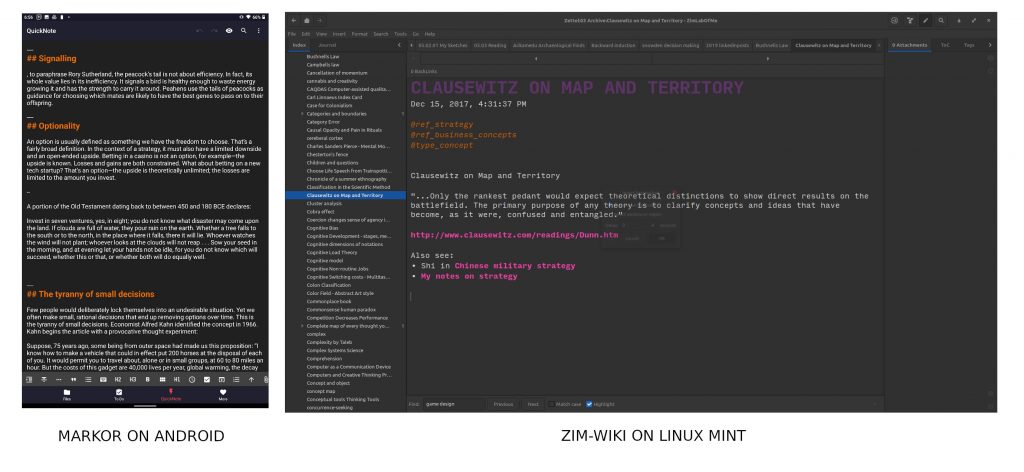
I grab interesting bits from the books and articles I read on my Lenovo Tablet. I use Markor, a markdown wiriting app for this. Drivesync syncs the local data straight into my zim-wiki inbox on my desktop. When I have some spare time, I integrate these snippets into my repository of notes on interesting things.
Now Good fantasy fiction on the other hand, can take as much of my time as it likes because as far as I’m concerned, all the growth hacking lore in the world cannot hold a candle to berserker orcs, devious wizards, or swashbuckling heroes who can turn a phrase.