Cynicism and AI
Broadly speaking, I’ve come across two types of reactions to the opportunity/threat of generative AI within the Art and Design community. The first type has embraced it, while the second type, which I think is the overwhelming majority, has a reaction to the tune of – “AI can never replace human creativity…”
I feel like this latter group say this to reassure themselves, like mumbling in the waiting room at the dentists. “It’s fine. I’m going to be ok.”
I remember a similar argument from studio artists at MAA Bozell, when I worked there in the early 90s. Computer graphics were just becoming mainstream, (but pixelated, ugly and almost directly unusable for print work). These artists, who used a manual airbrush and compressor to create art, had responses like – “These ugly boxes are never going to replace sophisticated tools such as ours.”
They eventually did.
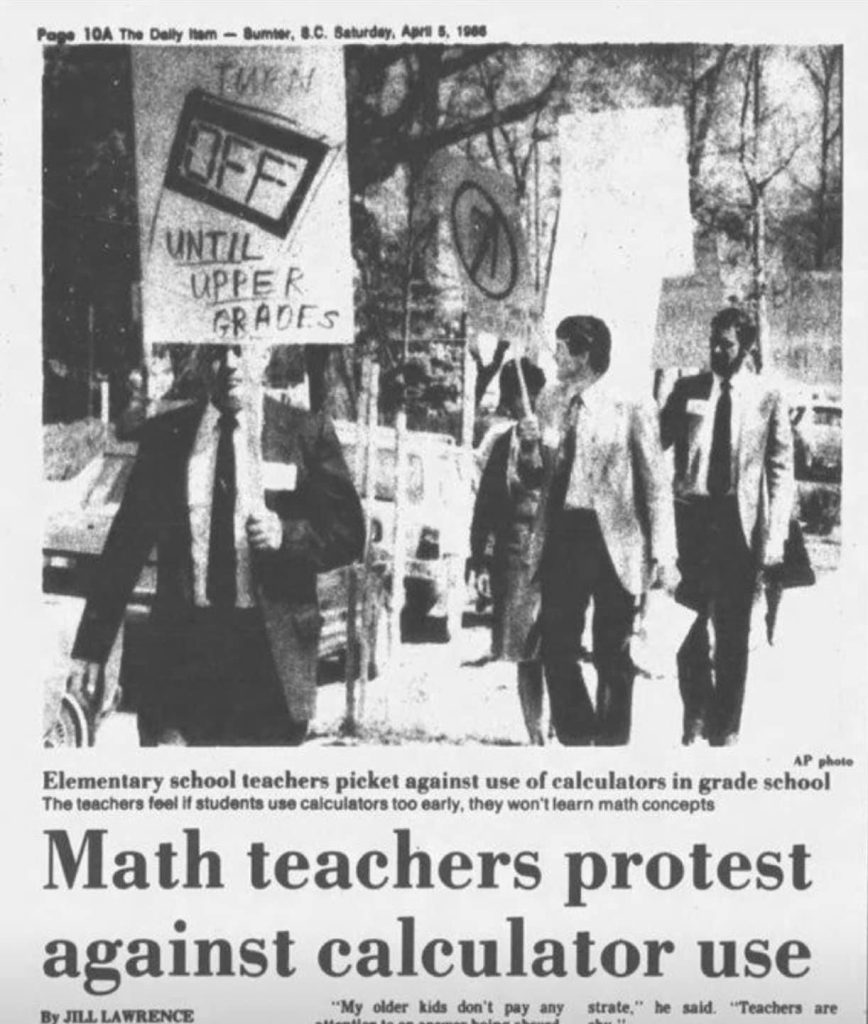
I guess I’m a cynic1. I tell myself that this attitude2 helps me clear the cobwebs of unwarranted hope (but then, it also doesn’t make me any fans).
Back when I worked at a large Edtech startup3, I witnessed how one thoughtless hiring decision to bring in a management consultant4 could absolutely demolish several thousand man-hours of carefully designed pedagogy. This guy simply did what he was trained to do – optimize for profitability5. Areas such as curriculum development, teacher training, user testing – all became easy targets for cost reduction. One cannot begrudge an attack dog for its training, so, to put things in perspective, it helps to ask this followup question when you hear that AI will never beat human creativity.
“Sure, but how much do markets really value human creativity?”
Because, what ultimately decides these kinds of things are market forces, never hope and prayers6.
Footnotes
Cynic, meaning, of the type that aspires to the ideals of Diogenes, also maybe a little bit of the contemporary kind, though I try to not let my cynical attitude turn into cynical behavior. ↩︎
My cynical attitude protects me from my inability to recognize social cues, (I have some trouble in this department.) and the skepticism that comes with it has served me well. For instance, I seem to be among a tiny minority that sees design-thinking as snake oil, and even if it is a no-brainer that I ought to be jumping on this fat-stacked, money-printing bandwagon, my skepticism won’t allow me to sell it to my clients. Cynics, it seems, are also a tiny minority in a positivity seeking world. ↩︎
I’ve been meaning to write a longish piece about my experiences in the wild, wild world of Indian Edtech. There is a lot of witch-hunting going on in that space right now, which means whatever I write at this point has to be a very hypothetical, nudge-nudge wink-wink sort of thing, which will be no fun to write. So I’m not going to. Maybe once the hubbub dies down and the skeletons retreat to their closets, I can give it a shot. Perhaps in another 6 months. ↩︎
True story: This bright spark in the business firmament used to advise Pizza chains on how to cut costs by watering down their cheese before another, denizen of the same species hired him to manage the Education business. Needless to say, the new hire brought his best-practices along, except this time instead of pizza, it was pedagogy. ↩︎
Optimizing for Profitability. Sounds legit, right? Actually, there is such a thing as suboptimization. If what I am building does not have a precedent, and I’m wading out into the unknown, it makes sense to explore the space before exploiting it . Soak before squeezing, basically. ↩︎
See this post on Linkedin. An illustrator requesting an airline to rethink it’s use of Generative AI ↩︎