A Banana Worth Millions

Why did the sale of this work of Art drive people bananas?
Table of Contents
In the years following India’s Freedom from British rule, a group of Indian Artists—deeply disturbed by the partition—began exploring a new style of Art and in 1954, they organised an exhibition of their work in Delhi. It so happened that Leon Elias Volodarsky, a Norwegian surgeon visiting Delhi under a United Nations Commission, walked into that Art show.
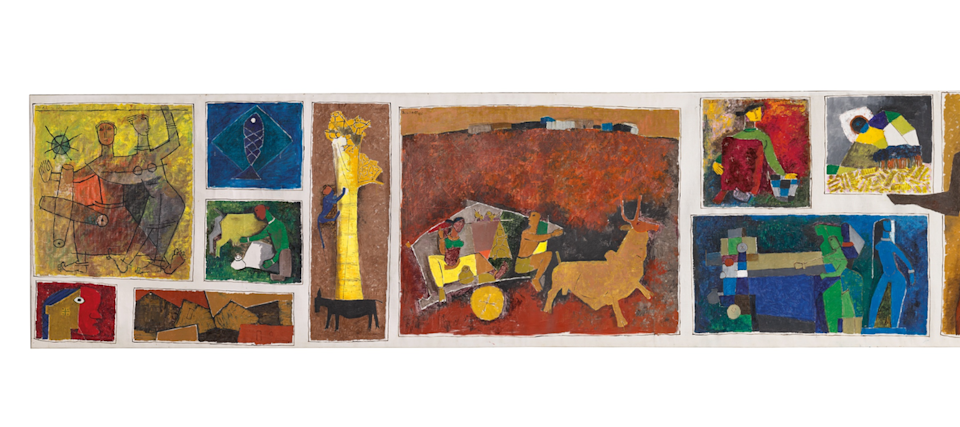
Volodarsky, called ‘Volo’ by his friends, was an Art lover. He had previously served in China and then Korea, and was visiting India to establish a Thoracic Surgery Training Centre in Delhi on behalf of the WHO. At the exhibition, one artist had two large paintings on display; an Indian bureaucrat purchased one, and Volo acquired the other for Rs.1400.
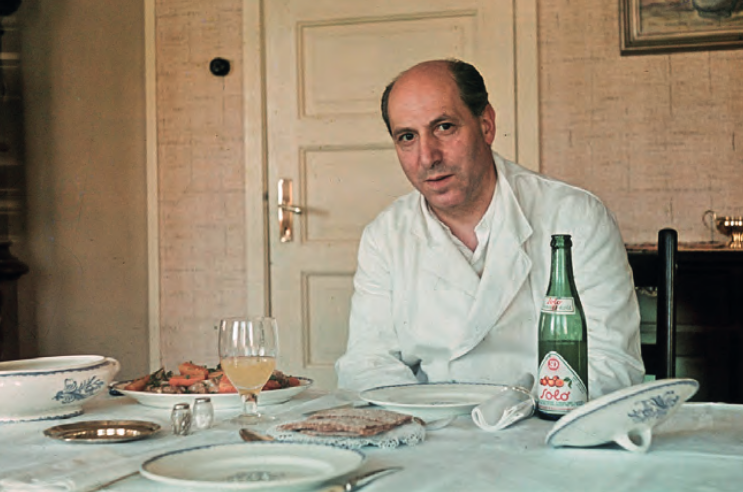
IMGSRC: Leon Elias Volodarsky in his apartment in Osla. Photo: Harald Renbjør. Courtesy of Levanger Photo Museum
After his commission ended, Volo returned to Oslo, and carried the painting back with him. In the early 1960s, Volo gifted the painting to a friend, the head of Neurosurgery at Ullevål Hospital, where it remained on display in a private section long after Volo’s death in 19621. It stayed there for the next 63 years, until March 19, seven days ago, when it was finally put up for auction by Christie’s in New York.
The painting, originally untitled, but now referred to as Gram Yatra, sold for a record $13.7 million2. The artist was the prolific M.F. Husain.

Around the same time, on the other side of the world, I was visiting the newly renovated heritage building, Sabha in Bengaluru’s Ulsoor, and was introduced to a visiting Art researcher. During our meeting, I brought up Comedian, the 2019 artwork by the Italian Artist Maurizio Cattelan. The sale of Comedian created an uproar on social media last year when Justin Sun, a cryptocurrency entrepreneur purchased it for $6.2 million, and then, ate the work of art, which was an actual banana, duct taped to the wall of the gallery.
The Arts researcher confessed that she couldn’t comprehend the Art work. “It’s a piece of fruit”, she told me, “come to Kerala, and I’ll show you a thousand such artworks.” In the weeks following the sale of Comedian, I heard similar opinions, the bulk of which revolved around objections such as:
- “But, is it even a work of Art?”
- “But, it’s just… fruit.”
- “But, where is the effort?”
- “But was it really worth $6.2 million?”
I’m not an art critic, so this post is not a critique of Catellan’s Comedian. What I will do instead is address each of the objections I listed, and by the end of this post, I hope to establish why Comedian is indeed a work of Art and why it deserves a place in Art history.
But is it even Art?
In 1999, V. S Ramachandran, a renowned Neurosurgeon co-wrote a paper titled—The Science of Art3—which begins with this thought experiment. “If a Martian ethologist were to land on earth and watch us humans, he would be puzzled by many aspects of human nature, but surely art — our propensity to create and enjoy paintings and sculpture — would be among the most puzzling. What biological function could this mysterious behaviour possibly serve?“
This is definitely a puzzling question. If the purpose of creating art was to depict reality, a camera could do the job efficiently. So what is the function of Art? But then, since much of Art goes beyond mere depiction of reality, a better question may be, what is the purpose of Art.
Rasa, roughly— juice—is a concept in Indian Aesthetic Theory that alludes to the emotional flavour inherent in Art. To enjoy the rasa of an artwork, one needs to be in the right frame of mind, or attitude, which is referred to as Bhava.

IMGSRC: What is Bhoota Kola, The Hindu
Anyone who has a watched a Yakshagana performance or the Bhoota Kola performers in the movie Kantara4, have no doubt experienced the Bhaya (Terror), Soka (Sorrow) and Krodha (Fury) rasas portrayed by the performers. The potency of these Rasas comes from the performance. The performers put us in the right frame of mind—the Bhava—to experience these Rasas. The performance provides context5, a fertile space for these emotional flavours to take root, an experience called Rasanubhava.
This is ultimately the purpose of Art. To create in us an emotional state, to evoke a certain feeling, to transport us to a space of aesthetic experiences.
In 2019, Maurizio Cattelan was in New York visiting galleries and looking at auction results. Everywhere he looked, he saw paintings and most of them he said, sold for absurd prices.
“I thought about the idea of painting and what a painting is. A painting is the most recognizable symbolic space in the history of art. Anybody, really anybody, can take a rectangular or square piece of wood, canvas, or paper, put something over it—color, shit, straw—hang it on the wall, and whoever sees it will call that thing a painting. Never mind good or bad.” says Catellan in an interview6.
“So I thought about something that, without being a painting, could compete with a painting. Something that anybody could see and know what it is. I guess everybody knows what a banana is.”
Comedian uses a banana as it’s medium because it is satire. It mocks the art world, which has a penchant for paintings that sell at absurd prices.
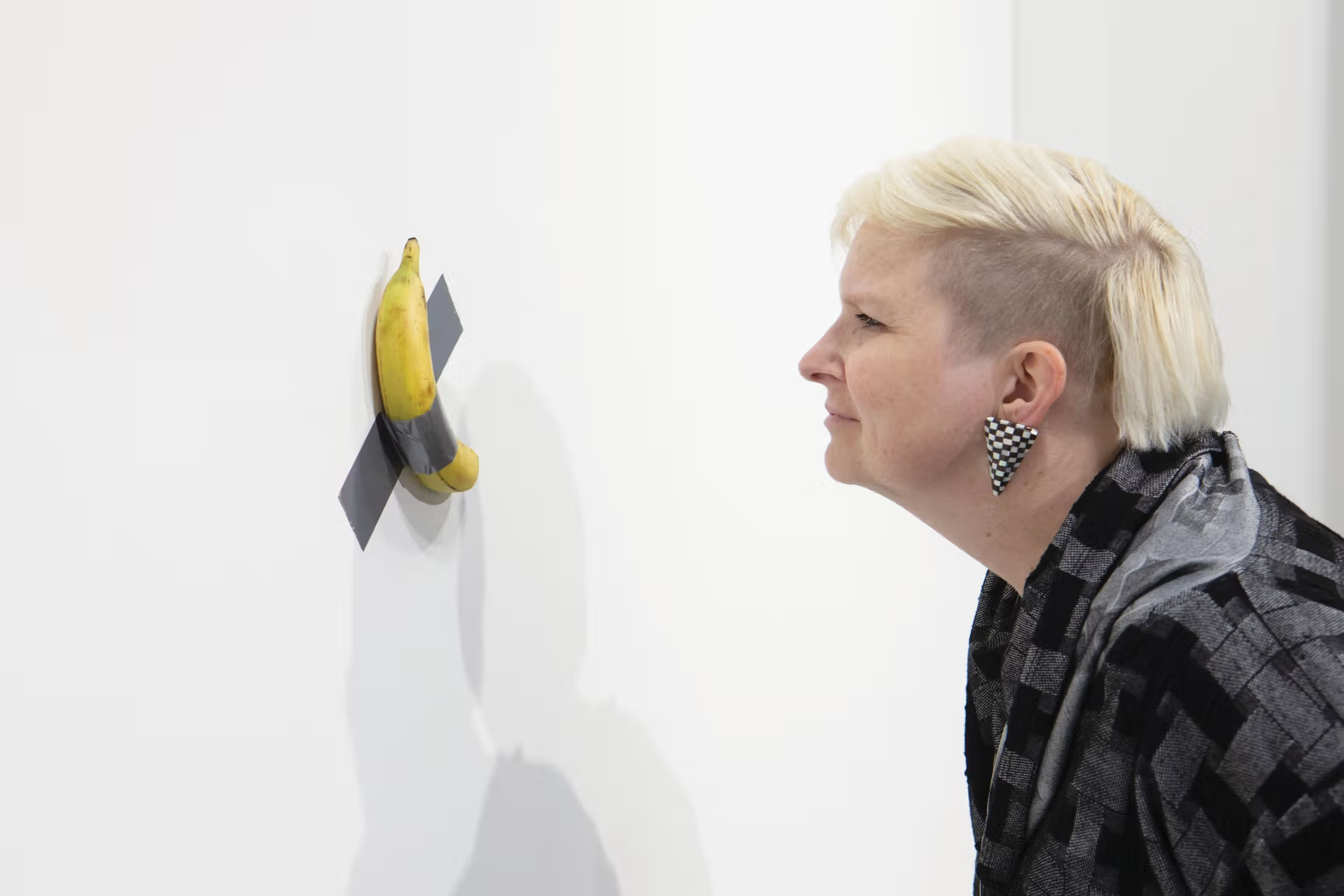
IMGSRC: Catellan’s Comedian. The Art Newspaper
I remember a standup routine by the comic, Louis C.K., in which he discusses body parts. The knuckle, he says is funny because of it’s incongruity. In a society that is preoccupied with stately noses, kohl’d eyes and shapely necks, nobody expects to discuss the knuckle. Catellan’s Comedian exploits this incongruity. The banana is the knuckle of the Art world. It is the hasya-rasa at work.
But, it’s just… fruit.
If one’s objection is that Comedian is not Art because it is a fruit, then one can apply that argument to all Art. Any work of Art can be reduced to its constituent elements.
The Mona Lisa? Just daubs of oil paint on wood. The Thinker by Auguste Rodin? A big hunk of Bronze. M.F Husain’s Gram Yatra which sold for $13.7 million, splotches of oil paint on Canvas. All art is created using some medium or the other and in the end they are all just wood, canvas, metal and paint.
Marshall McLuhan, the philosopher coined the phrase The medium is the message, and this is what we should actually care about. Why did Catellan choose to use a piece of fruit as the medium for his Artwork? Why not wood, or canvas or metal?
“Indeed, it is only too typical that the ‘content’ of any medium blinds us to the character of the medium,” said McLuhan. The absurdity of the medium is what drives the message in Catellan’s Art work.The incongruity of a banana in an art gallery is why he chose to call it Comedian.
This is why context matters. The Indian philosopher, Abhinavagupta, claimed that anaucitya, incongruity or inappropriateness, is what creates humour. Anaucitya refers to a mismatch between elements in a given context, that which evokes a sense of humor7. A banana in a fruit stand is just another banana, but taped on the wall of a gallery, alongside paintings, it is a mismatch, inappropriate to it’s environment. Comedian is Art precisely because it is a piece of fruit presented out of it’s regular context.
But, where is the effort?
In a previous essay, The Ingredients of Identity, I wrote about how a client refused to pay me for a logo that I designed for him. He liked my work, but the simplicity of it convinced him that I spent no more than a few seconds creating it, and so I had no business charging him so much. That incident reminds me of a famous joke, which goes something like this:
A company calls an engineer to fix a machine that has been down for a long time. He examines it for a while, then he gives it a good kick, and it starts working, perfectly. The client is amazed and asks him how much they owe him. He replies, “My fee is Rs.1,00,000.” The client is shocked. “Why is it so expensive when all you did to fix it was kick it”, they ask. “It’s Rs.1 for the kick and Rs.99,999 for knowing where to kick it!” says the engineer.
Those who create for a living know exactly what this story conveys. People tend to reward visible effort and discount the expertise that comes from experience. Psychologists refer to this as Value Attribution Bias, a cognitive bias in which people assign value to a task based on it’s perceived effort rather than the actual expertise that is required to achieve the outcome.
This is what Picasso meant when he said “It took me four years to paint like Raphael, but a lifetime to paint like a child” and he wasn’t kidding.
Here are two paintings. Picasso created the first one when he was was 15, and the other when he was 48 years old.
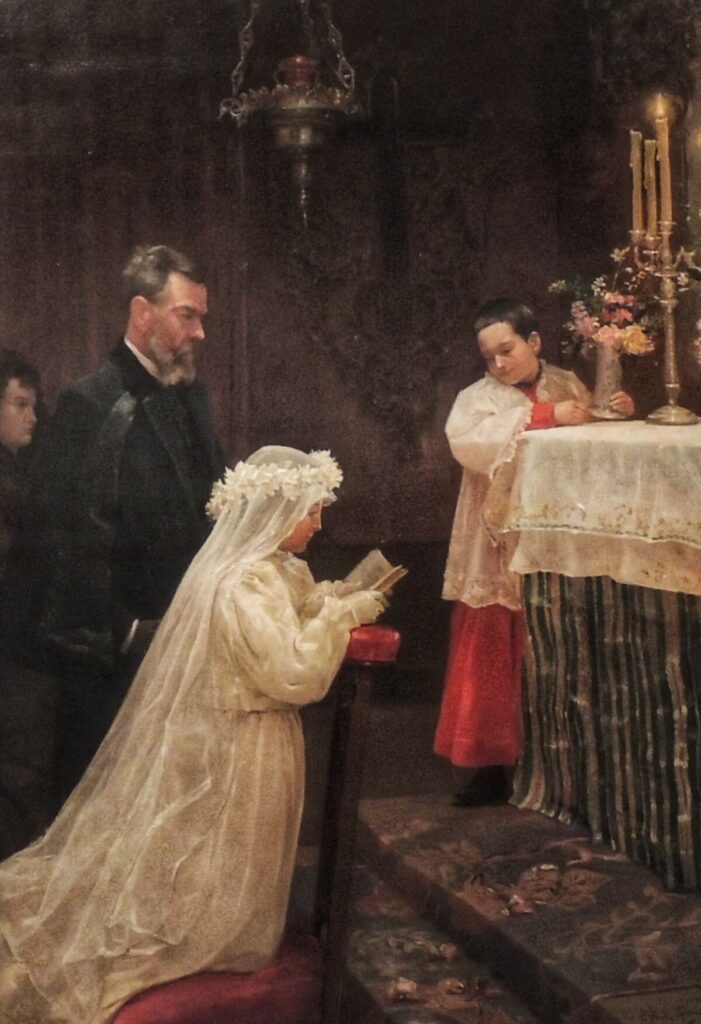
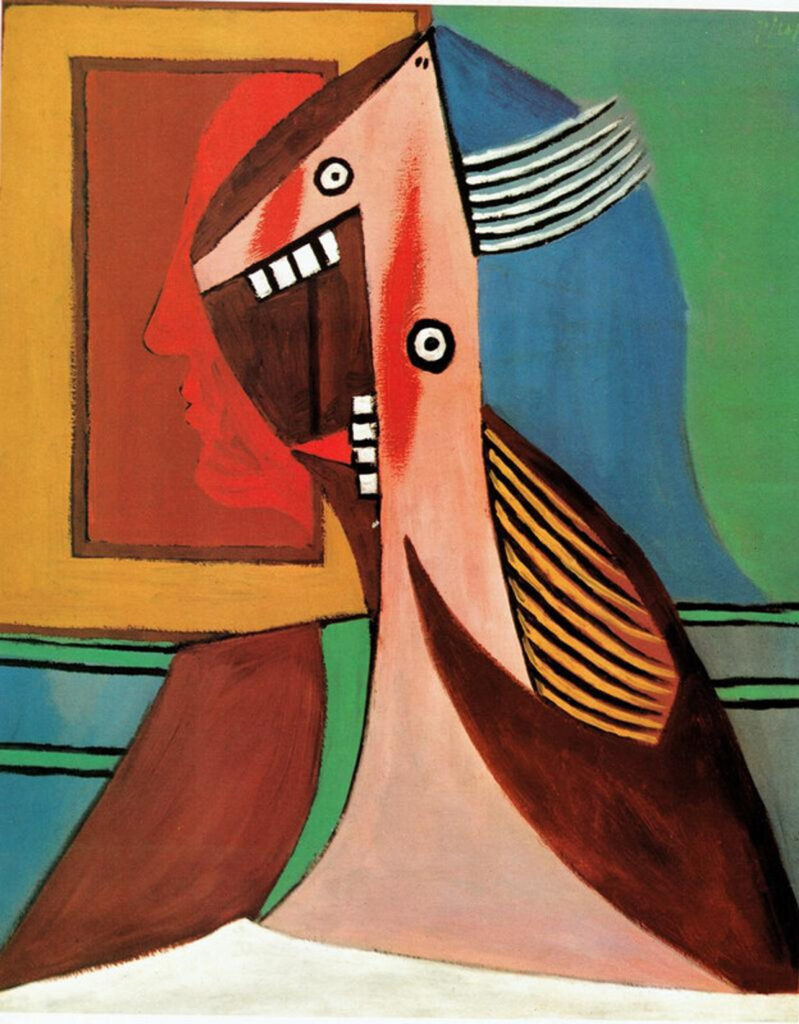
Which of these two required more effort? Remember, one of them required 15 years to create and the other – 48. The Art world is filled with examples such as these. Here is one more by Piet Mondrian. He drew this Chrysanthemum in 1909 and 33 years later, in 1942, he painted the other one, titled—Broadway Boogie Woogie.
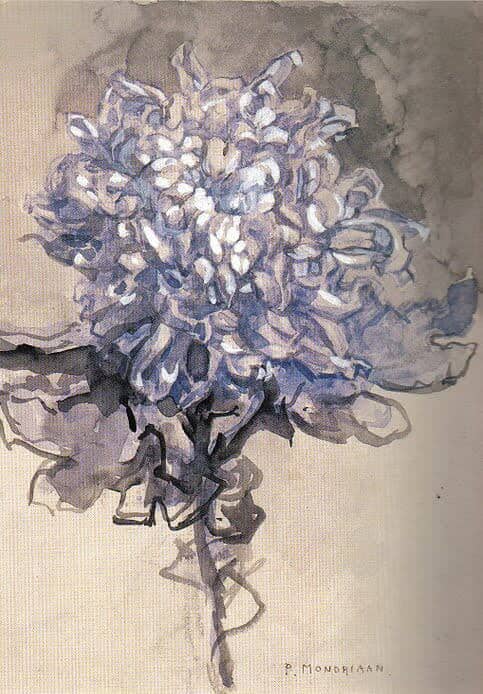
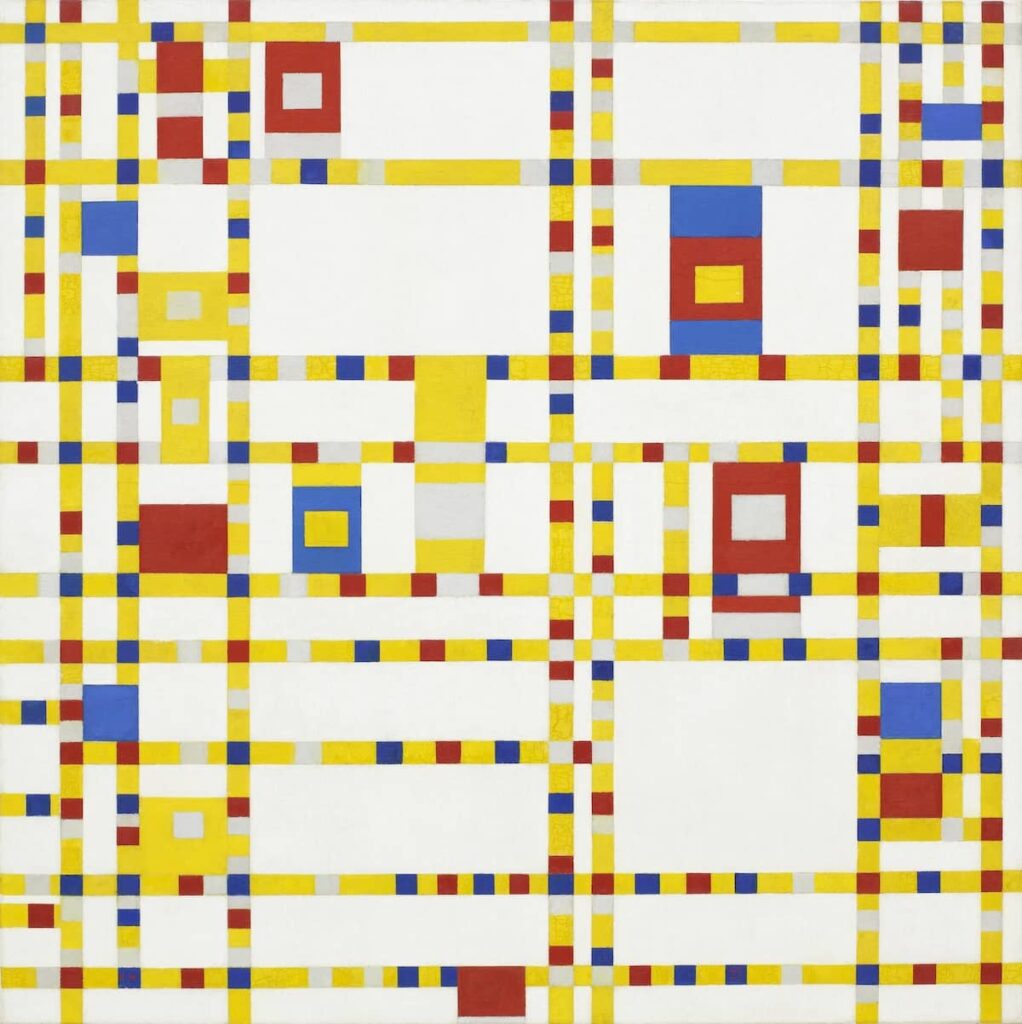
Why artists choose to work in a particular style is out of scope of this post, but it is helpful to understand that an artwork is almost always a reflection of the society, culture and the events of it’s time. I think that cubism occurred around the same time period that physics was postulating time as the Fourth dimension is no coincidence8.
Which brings us to Catellan’s Comedian. The effort behind the work does not lie in the physical act of duct taping a banana to the wall of a gallery. It is the result of years of satirising the Art world using media as diverse as photography, woodwork, taxidermy, wax, glass, marble, stone and paper among many others9. A banana is simply one more medium to convey his message.
But was it really worth $6.2 million?
Value is a strange thing. Economists are constantly surprised by what people value and how value is often created from intangible concepts like supply and demand, utility and scarcity.
Take jolly old Santa Claus for instance.
- Who owns the copyright to Santa Claus?
- What is the image of Santa Claus worth?
The answer to the first question is—No one owns Santa Claus. He is a cultural icon and people can only own the copyright to specific portrayals of him. Coca-Cola, for instance, holds the rights to one specific portrayal of Santa.
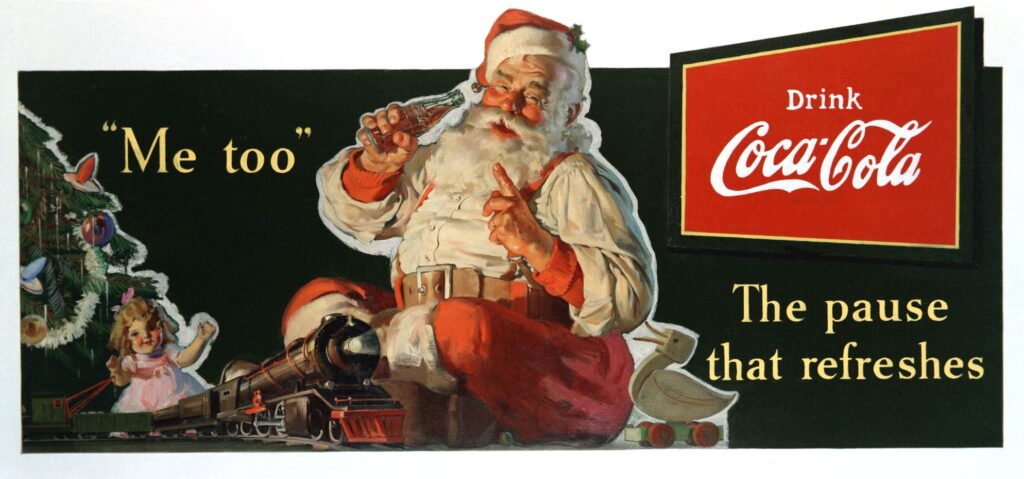
Haddon Sundblom’s painting of Santa is the only portrayal that Coca Cola owns.
The answer to the second question, is—Billions! In the U.S. alone, retail sales during the Christmas holidays exceeded $800 Billion last year and Santa Claus played an important role in driving those sales.
Another example is the Happy Birthday song we sing at birthdays. What do you think that is worth? $50 million. That’s what the Warner Music Group collected in licensing fees for that song until it lost a lawsuit in a ruling that declared that the song was in the public domain.
Remember the joke about the engineer who charged Rs.99,999 to kick the machine? An accountant would call his pricing strategy ‘Value Based Pricing‘. It operates on the idea that the price of a product is based on the perceived value to the customer, rather than on what it cost to produce it. In the case of the engineer, the value lay in his experience and knowledge in knowing where to kick the machine.
What makes Catellan’s Comedian valuable?
In his book, The Selfish Gene, Richard Dawkins famously described memes as a unit of cultural information10. Like genes, memes replicate, spread easily and have an impact on society because they shape our ideas and beliefs.

The distracted boyfriend meme is familiar to most people who use social media. It has been replicated, adapted and spread around the world, in many different contexts.
Art has a similar effect on society and culture. Visit the Japanese restaurant—Kazan—on Bengaluru’s Church Street, and you will see a mural of Hokusai’s great wave. There are hundreds of interpretations of Van Gogh’s famous painting, Starry Nights. The Mona Lisa is replicated on t-shirts and Posters the world over. The list goes on. From the point of view of Cultural Anthropology, Art has memetic properties. People imitate it, communicate through it, are influenced by it. Art has emotional resonance and transmits culture.
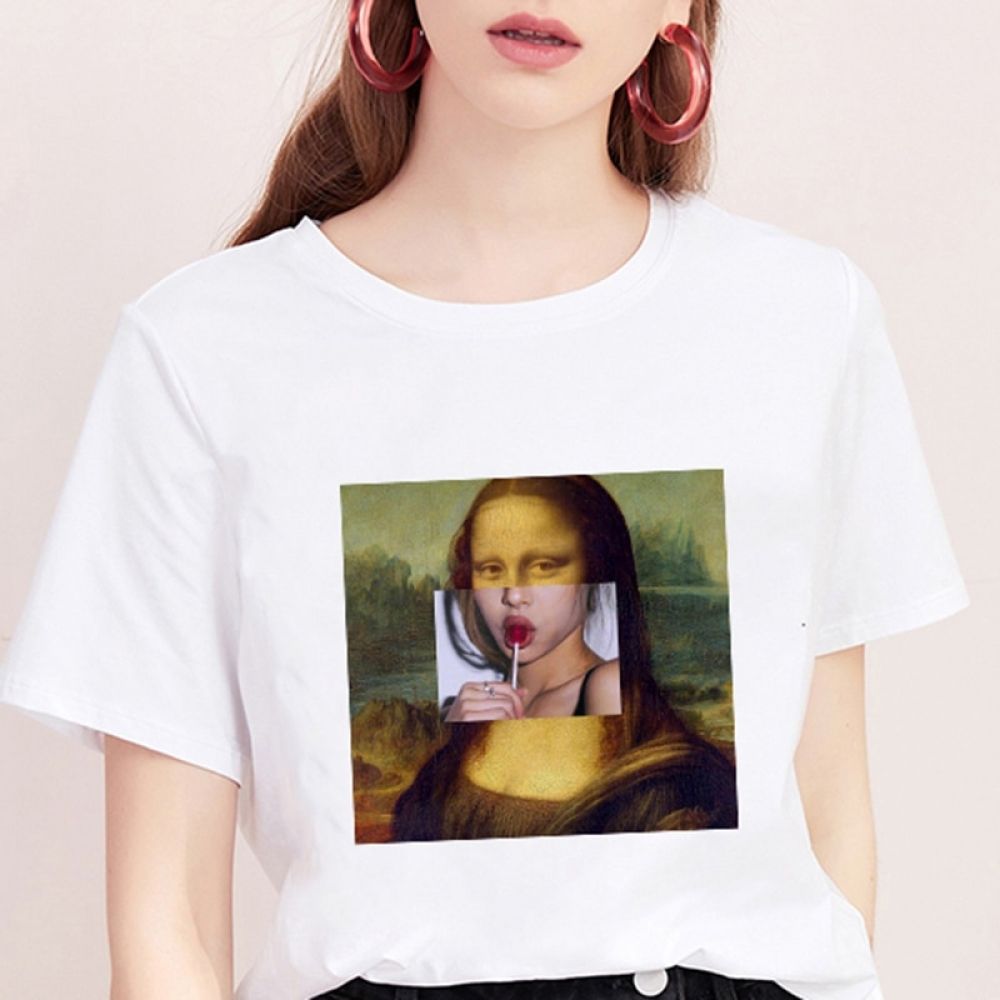
So, the value of Comedian lies in its role as a piece of culture, a piece of artistic history, a meme that has the power to endlessly evolve and transmit cultural information and the person who purchased it did the one thing that could drive up the perceived value of a memetic piece like Comedian—he ate it! In the process, he injected himself into Comedian‘s myth.
A Theory of Art
If Comedian is so layered, why did people react with mockery when they learnt that it was purchased for millions? I think a part of it is that the ecosystem of the art-world is inscrutable and opaque to anyone outside of it. The layers of our stratified society bestow different privileges to each layer, and that makes each layer opaque to those outside of it. The status seeking behaviour of people outside one’s layer becomes a mystery.
A middle class family that owns a hatchback car, say a Tata Indica, will find the behaviour of someone who buys a Bentley Mulsanne for 6 crores of Rupees baffling. A car is just another mode of transport, isn’t it? The Bentley owner will disagree, because to them the car isn’t a mere mode of transport.
Arthur Danto’s essay The Artworld11, explores this question—What distinguishes a work of art from a mere object? According to Danto, art cannot be understood solely through its physical properties but must be contextualized within a cultural and theoretical framework—what he calls the artworld.
This framework comprises a community of artists, critics, historians, and institutions that give meaning to artworks and without the artworld’s theories, a painting or say, a sculpture could not be distinguished as art.
This is not such an alien idea. Walk around Bengaluru’s Malleshwaram, and you will find a Rangoli outside some houses. These may seem like simple patterns drawn in chalk, and a visiting foreigner who knows nothing about Indian culture, may be forgiven for assuming those patterns are mere decoration. To understand the significance of a Rangoli, and how it differs from a Kolam, or a Mandala requires a theoretical framework, formed through historical, cultural and religious ideas that we are steeped in as Indians.

IMGSRC: Sikku (‘knot’ or ‘twisted’) kolam in front of a house in Tamil Nadu during housewarming. Wikipedia

If this visitor took a Rangoli pattern back to their Country and replicated it as a wall-mural, would we still call it a Rangoli? Probably not. For it to be an actual Rangoli, it needs to fall within a specific cultural discourse—such as which deity was it dedicated to? What type of powder was used to create it? Was it paired with a Tulsi plant or does it stand alone? Does the pattern change depending on the auspices of the Month and so on.
According to Danto, the discourse of the Artworld provides a similar space for an object to conferred with the status of Art. What is its provenance? What historical or cultural narratives does the piece reference? How does the piece advance our understanding of a specific idea?
Catellan’s Comedian is Art because it pokes fun at the artworld, and it is not a one-off attempt by the artist either. His previous artwork is also critical of the system. As a piece of Relational Art, Catellan’s Comedian mocks paintings—a form that most people consider Art. Ironically, this brings it within the discourse of the Artworld, making it a genuine piece of Art.
By inviting mockery and disdain from the general public, one may argue that Catellan did in fact achieve the goal he set out for the Comedian. He used public sentiment to dress the artworld in the emperor’s new clothes. I once read a quote by a polish Art critic, Antonina Vallentin: “Art is never chaste. It ought to be forbidden to ignorant innocents, never allowed into contact with those not sufficiently prepared. Yes, art is dangerous. Where it is chaste, it is not art.”
Our own M.F Husain discovered this the hard way.
Notes
Read a tribute to Dr.Volodarsky penned by Dr. Prakash Narain Tandon. Dr.Tandon lived with Volo in Oslo for a year. Read The spectacular life of Leon Elias “Volo” Volodarsky._(PDF) ↩︎
Read more about the auction of Gram Yatra on Artnews ↩︎
Read The Science of Art, by V.S. Ramachandran and William Hirstein. (PDF) as well as this great lecture: Aesthetic Universals and the Neurology of Hindu Art (VIDEO) ↩︎
Watch the Trailer for Kantaara over at IMDB (VIDEO) ↩︎
Watch this Odissi dancer portray the hasya-rasa (VIDEO) ↩︎
The interview in which Catellan discusses why he chose a banana for the Art work ↩︎
Groucho Marx was terrific at this sort of incongruity: “One morning I shot an elephant in my pajamas. How he got in my pajamas, I don’t know“. ↩︎
Many art theorists as well as scientists with an interest in art have claimed that physics influenced cubism. This paper argues otherwise. It even claims that Einstein himself stated that Cubism has nothing to do with the Theory of Relativity. (PDF) ↩︎
You can browse through Maurizio Catellan’s body of work on Artnet. ↩︎
Read the chapter on Memes from Richard Dawkins; book: The Selfish Gene (PDF) ↩︎
Read Arthur Danto’s essay: The ArtWorld(PDF) ↩︎