04 What is design-led strategy


A little Preamble
This piece is part 4 of a series (start here) on design-thinking and this one turned out longer than I intended. Use the TOC to scroll down to the whichever section interests you the most.
Section 1 explores some assumptions around the idea of Strategy and trace some of its larger influences. This is important because the term is interpreted as many different things today and exploring its past will give us a thread to hold onto, so we are not mired in pointless semantics later.
In Section 2, we examine the meaning of design-led strategy. One of the objectives of this article is to dispel the notion that strategies are the result of quasi-mystical management processes by visionary leaders with prophetic abilities. Instead, we look at strategic-thinking as a natural cognitive process, and how we can adapt design methods for strategy work.
We also briefly look at design-thinking’s potential for strategy development.

Table of Contents
Section 1 - What is Strategy
Thinking on your feet
What do strategists do? To illustrate the nature of Strategy, the field that has captured the imagination of business gurus everywhere, we begin with the story of a small village in Punjab, considered by some military historians to be the site of one of the largest tank battles in history.
India was not particularly prominent on the world stage in 1965 and internally it wasn’t a stable time for our country either. We had only just become independent of colonial rule and were still trying to grow a shaky economy. Nehru had passed away recently and as for the army, it was still recovering from the Indo-China war of 1962. All these factors may have seemed like an appropriate time for Pakistan to try a lightning quick invasion of India. At the time, Pakistan had recently upgraded its military infrastructure through a windfall of $ 1.2 billion worth of American military aid, which included Sabre jets, artillery guns and Patton tanks. India meanwhile, was still in the midst of reorganizing its forces, and still largely used a patchwork of equipment from the last great war.
The Battle of Asal Uttar
On the 8th of September, Pakistani tanks, using blitzkrieg tactics, crossed the border and captured an Indian town, causing Indian forces to fall back and assume defensive positions. The defence strategy by the Indian command was to form a horse-shoe shaped trap with Asal Uttar, a small village as its focal point. The Indian forces were mainly infantry, with equipment by way of a few old French light tanks, a handful of Centurions and recoilless anti-tank guns mounted on Jeeps.
That night the Indian troops laid the trap. First, the formation itself was organized as an aggressive forward defense, instituted to arrest the enemy’s momentum. Next, nearby canals were breached to fill the fields around the area with water, turning them into temporary swamps. Finally dense sugar-cane fields were used to hide the armour, as the tanks went hull-down into the fields and infantry with anti-tank capabilities spread out into the dense crop. Tight control of the terrain was important to ensure that the Pakistani tanks could not break free into the open fields, which could work to their advantage.
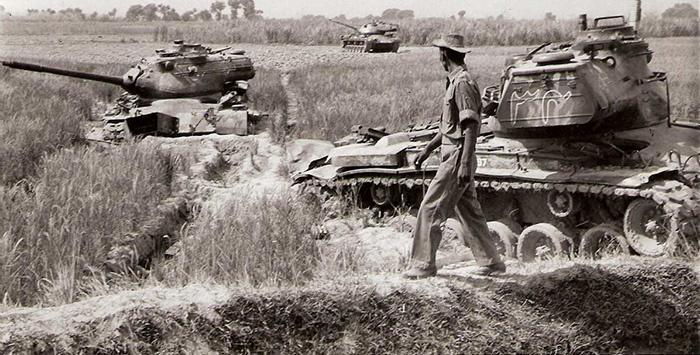
The battle that occurred the next day went down into history as an ingenious example of situational awareness and adaptive, emergent tactics. You can read the entire story here. Even though Pakistan began with vast superiority in numbers and in weaponry, it lost the war as a whole. More than half of the losses of its tanks were at the battle of Assal Uttar. Pakistan had lost a little over a hundred of them to Indian foot-soldiers that day.
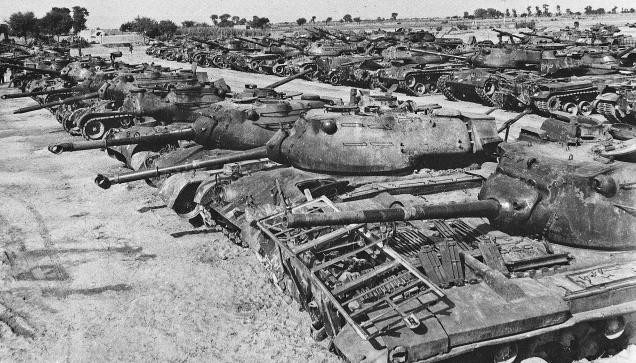
This story contains all the elements we love to hear in a good strategy story. The plan which allowed commanders flexibility in battle, the ability of the forces to turn the local terrain to their benefit, the initiative to take quick advantage of the Pakistani tanks that were bogged down in mud and maybe even a little bit of luck. What this story illustrates is that strategic thinking involves assessment of one’s resources and the environment, gaining situational awareness and adapting resources at hand, for a concentrated application of force.
These simultaneous threads of information-foraging, synthesizing, making sense of the situation and responding is what the rest of this article is all about. To understand strategy by groups though, we have to first understand strategy by individuals, by both man and animal.
Strategic-Thinking in Individuals
We can agree that strategic-thinking in its most basic form is an inherent ability in people to recognize problems, anticipate actions and act accordingly. It also involves a sort of mental time-travel (thought to be unique to humans) - aspects like episodic memory, which allows us to foresee and plan future events. Clearly strategic-thinking involves many different cognitive systems which may suggest that skills may be acquired gradually and scaffold over each other. So, at what age do such skills develop in people?
Problem-solving involves a sort of mental time-travel, which allows us to foresee and plan future events.
Studies of strategic-thinking abilities in preschool children suggest that children may learn adaptive-thinking around the age of 7, that is to say, they update their mental models and approaches to suit changes in the problem space. In tests of perspective-taking, conservation and task motivation, children begin to display basic strategic-thinking abilities at the age of 5, and as they grow older and develop executive functions and attentional mechanisms, they learn to involve more and more elements into the decision-making process. Interestingly, this sort of reasoned solving is not exclusive to humans. Octopi, dolphins, ravens, dogs and chimpanzees all solve problems.
Watch this crow solving problems.
Studies on Ravens for example, show that they may have a theory of mind, meaning, they attribute a mental state to another. They understand the perspective of other creatures, and behave accordingly. If they think they are being watched, for instance, they will hide their food more quickly. Chimpanzees have been observed to go even further. They have been observed not using trial and error in solving problems, like accessing bananas that are out of reach. This suggests they may actually have insights.
Playing Rock, Paper, Scissors
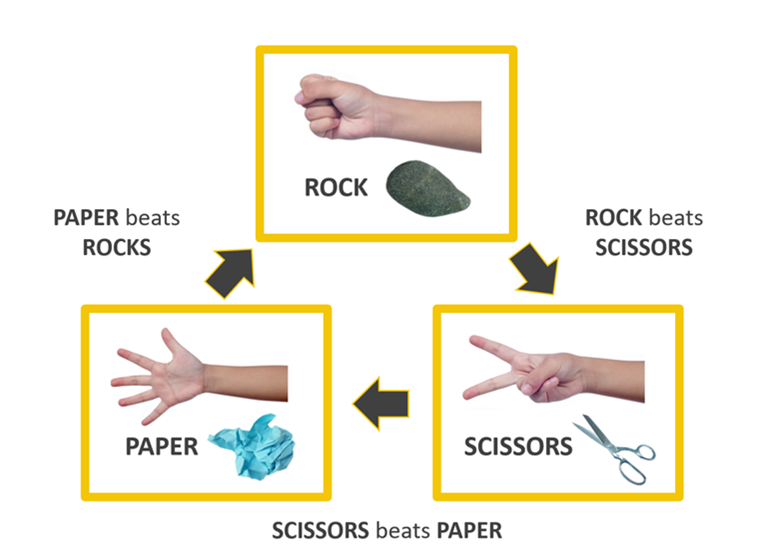
Let us take this a step further. Besides stringing together elements structurally, strategy also involves decision-making under a certain amount of ambiguity. Match-mismatch games like Rock, Paper, Scissors require some amount of strategic-thinking to win, even if it appears to be a game of chance.
This simple form of interaction can be useful to explain the complexities of evolving strategies when players don’t know how their opponents will respond and how decision-making works under these circumstances.
Such uncertainties require players to try and make sense of the gameplay and build a strategy through which they could win. For example, looking for give-aways such as tells or tics, looking for patterns in the other player’s moves or even subversive tactics, such as making it seem like you’re going for paper and turning it into a rock at the last moment.
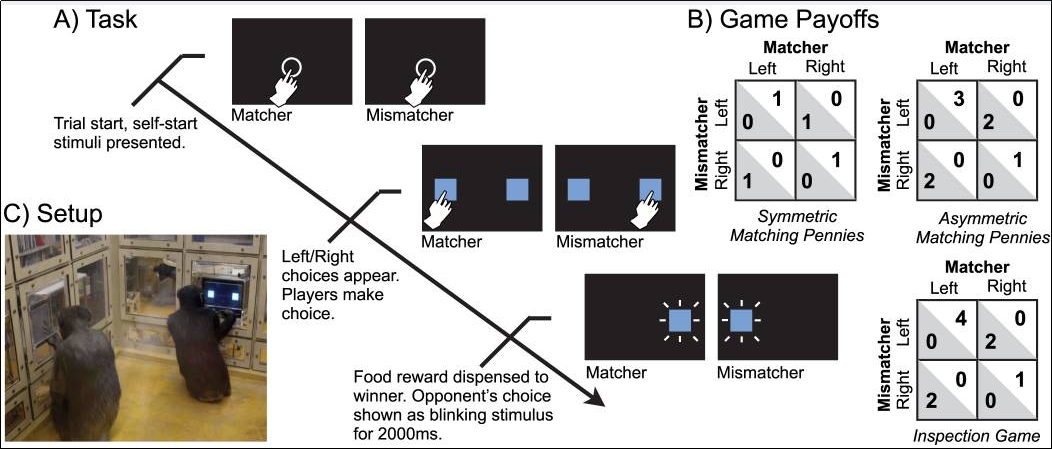
Source - This picture shows two chimpanzees in an experiment playing a match-mismatch game. Read the paper here and watch the video here
Studies of strategic-thinking in chimps for instance, applied to payoff-relevant actions (a treat for the winner) reveal surprising results. As this paper observes “chimpanzees may retain or practice a specialized capacity to adjust strategy choice during competition to perform at least as well as, or better than, humans have.”
The origins of Strategy in Groups
While strategic-thinking abilities in individuals can be studied, group strategy is an altogether different, and more complex subject. Challenges in communication and comprehension emerge as individuals try to mesh their thought processes with others. There is also a penchant for modern organizations to disconnect thinking from doing, with the main thrust of ‘strategy’ being thought up by senior executives and implemented by line managers. But how may group strategy have come about in the first place?
Perhaps the earliest forms of strategic-thinking as a group activity, occurred during hunting during pre-historic times. The act of hunting can be quite complex, and techniques were perhaps varied depending on the animals being hunted and the terrain and environment of the hunt. Some could be hunted using bait, while others by mimicking their sounds. Larger and more dangerous prey may have required days of stalking, flushing and ambushing, using weapons and traps. These lessons in hunting for sustenance, perhaps also lent themselves to warfare. In the era before states, prehistoric-warfare may have occurred as a result of opposing hunting-parties running into each other, and learning to use hunting weapons like bows, spears and clubs for offense and defense.
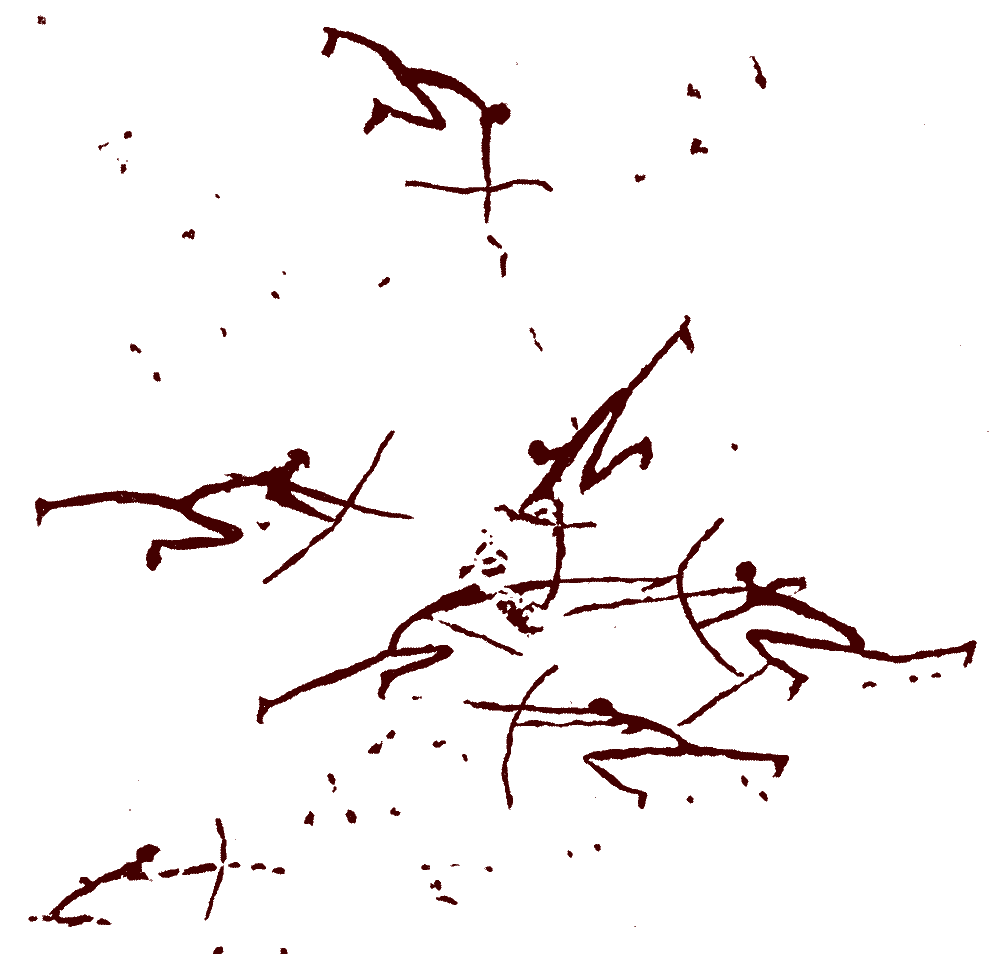
Source, Wikipedia: Cave painting of a battle between archers, Morella la Vella, Spain.
While there are many areas where we apply strategic-thinking, not many require so many individuals to put their minds together to evolve ideas for victory. Some historians claim at least 14,500 major wars have been fought in history, with at least 90% of all known societies engaging in war. Given the enormous cost in human lives, not to mention the fall-outs of war, warfare was most certainly a major concern as well as a catalyst for the evolution, and continued development of strategy as a discipline.
The birth of Military Strategy
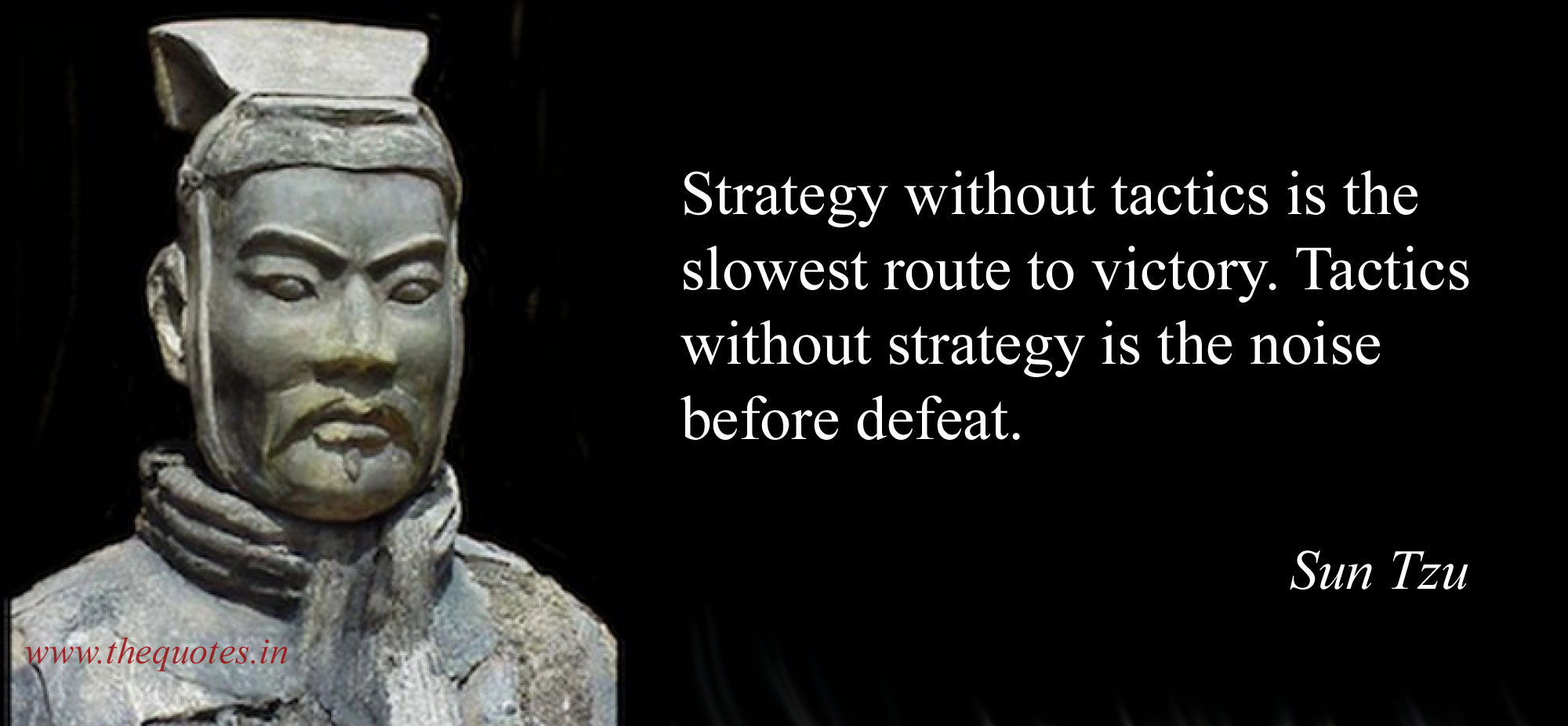
The earliest codified efforts on strategic-thinking seem to have emerged from places like China, India and Japan. Sun Tzu’s Art of War, (Approx. 400 BC) for instance devotes its attention to the attainment of victory framed using pithy aphorisms. The narratives and structure of the Art of War may seem simplistic to our multi-tasking minds, but it contains elements that the modern strategist may recognise, such as the notion of strategic assessments (Sun Tzu states five - The Way, weather, terrain, leadership and discipline) which one can recognize in today’s treatments of strategy, such as Porter’s five forces for assessing an organization’s competitive environment.
The Arthashastra by Kautilya is another example of an early attempt of formulating strategy and policy for state. Some date the text to around 300 BC, and the author’s credentials stem from his role as an adviser in establishing the Mauryan empire. While the Arthashastra covers more political and military ground than Sun Tzu’s treatise, it is interesting in it’s analysis of strategic movement.
In a chapter that deals with the appropriate time for military invasion, Kautilya says “The conqueror should know the comparative strength and weakness of himself and of his enemy; and having ascertained the power, place, time, the time of marching and of recruiting the army, the consequences, the loss of men and money, and profits and danger, he should march with his full force…”
The text implies that the author has considered military intelligence, internal evaluations of capability and capacity, time of execution as well as time-to-execute, pre- and post mortems and finally the concentrated and focused application of force. A more modern day description of this kind of activity may be summarized in the words of Richard Rumelt as, building a diagnosis, a guiding policy and a set of coherent actions.
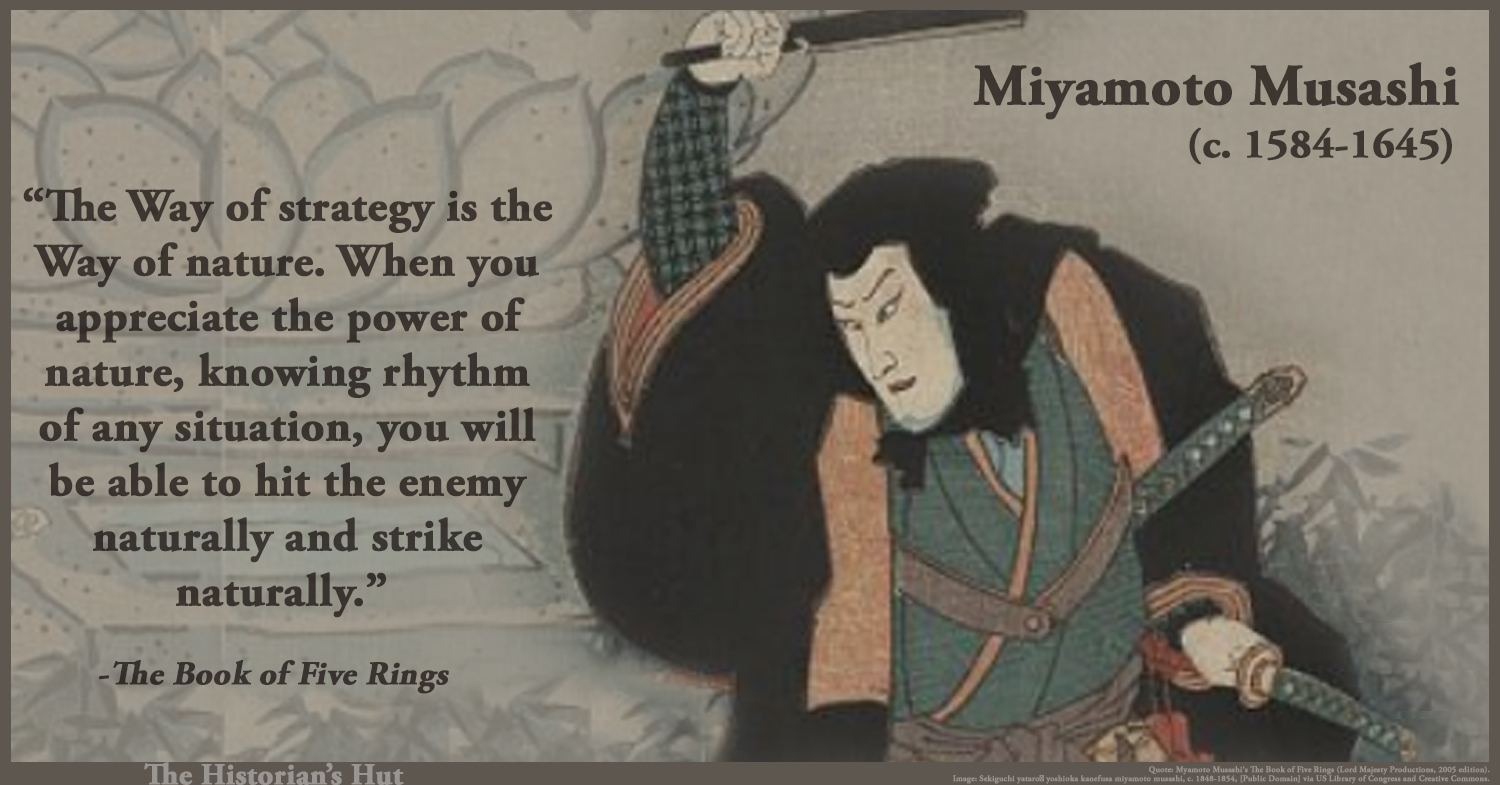
I also want to briefly discuss Miyamoto Musashi. Unlike Sun Tzu and Kautilya, whose historicity is not very clear, Miyamoto Musashi’s life has been well documented. His approach to strategy, described in his book The Book of Five Rings feels different. Sun Tzu and Kautilya’s books feel academic and scholarly. Their aphorisms and dictates seem like those of theorists (theorists are also the main source of literature in business strategy) but Musashi’s feel different. His work feels situated, and as such seems more like advice from a practitioner - someone who has crossed swords in battle and survived to write about it. I have written about applying Musashi’s teachings to business before, and what is interesting to me is this view of strategy from someone in the trenches.
The General, the Trooper and the Messiness of War
I first became fascinated with strategy as a kid through war comics. Besides an appreciation of fictional battle tactics, it also kindled in me a desire for art. Consequently, any information that I have on war comes from books and the closest I’ve experienced the conditions of battle flow are through video game simulations, like first person shooters, playing against human opponents. I play a game called Planetside 2, and have observed how players self-organise around maps and objectives, while still making tactical decisions on ground.

(Human) Players in Planetside 2 rush to defend a breach in their defences. Assisted by a HUD display that maps battle situations, players self-organise around goals like storming enemy territory or defending their own.
In battle, a general on a hill has a very different perspective from the trooper in the trenches. The trooper sees the actual terrain while the general sees a map. The advantages this affords the general is an objective, high-level view of battle movement, allowing him to direct it without being mired in its details. What the general does not see though is what the trooper confronts in the violence and din of battle - micro-moments to victory. A single flap of a butterfly’s wing that could turn the tide of war. As you will see later on, this is the perspective that we will take when discussing the role of design-led strategy.
Modernizing Military Strategy
Those early works were followed by more modern theorists on military strategy in warfare, the most famous one being On War, by Clausewitz. This Prussian general framed war as a political act, as illustrated by his famous dictum that “war was the continuation of politics by other means.” Though it was written at least 200 years ago, some of these policies can be observed on the world stage today, combined with the military needs of modern day conflicts.
Today’s military thinker is focused on what is called the fourth generation of warfare (4GW), characterized by conflicts over ideas, in which combatants are ad-hoc. Here the lines are blurred between state and non-state actors, politics and war, combatants and civilians, and in which the state can no longer clearly identify enemy forces. The ways in which military strategy is evolving with regards to 4GW is extremely interesting. A paper by the Rand Corporation that I came across called Hostile Social Manipulation, begins by saying…
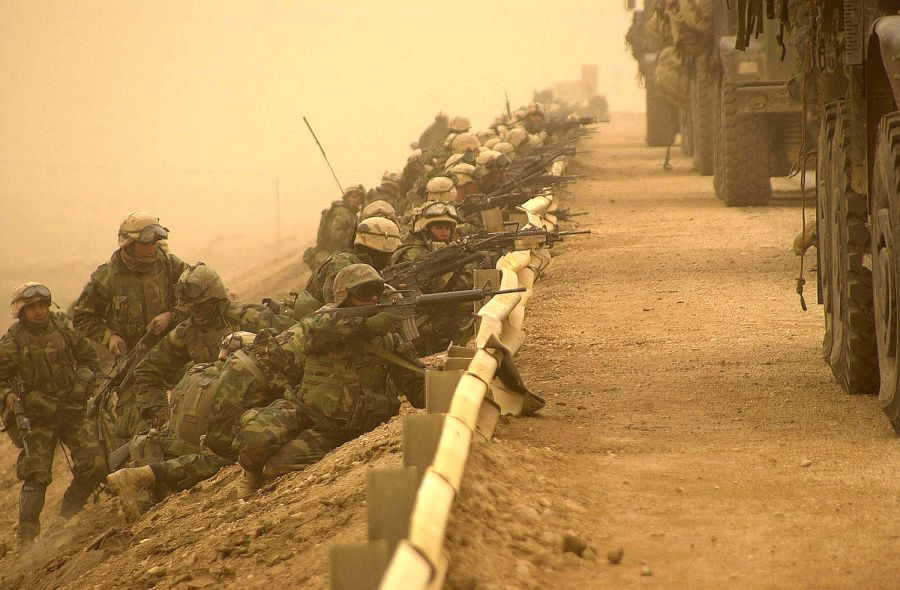
“The role of information warfare in global strategic competition has become much more apparent in recent years. Today’s practitioners of what this report terms hostile social manipulation employ targeted social media campaigns, sophisticated forgeries, cyberbullying and harassment of individuals, distribution of rumors and conspiracy theories, and other tools and approaches to cause damage to the target state.”
Narratives in warfare have therefore become an important topic in recent years. Gregory Bateson’s ideas of frames and framing as a tool to win conflicts, are becoming important again as military thinkers realize that ideas need to be countered with ideas. (Two people who generously share resources on this subject, here on Linkedin are Dr. Ajit Maan, who conceptualised Narrative Warfare and Gordon Rowe, who regularly shares a range of interesting documents. I highly recommend following them.)
We end this section on military strategy with one takeaway. The idea of war as a type of competition, in which people compete for resources and territories, either physical or ideological. Competition is a good theme to keep in mind as we move into business strategy.
A Brief History of Business Strategy
Sir Lawrence Freedman, author of Strategy, says that the business world generates more on strategy than perhaps any other field today, including the military. Most Freedman would say are of the type that one would expect from authors like Tom Peters, and he’s probably right. A search for books on strategy, on Amazon returns 60,000 titles, with the vast majority focusing on business strategy. Dozens of strategy frameworks have been formulated between the 1950s to today, (perhaps hundreds if you count every itty-bitty strategy consulting firm that ever existed.)
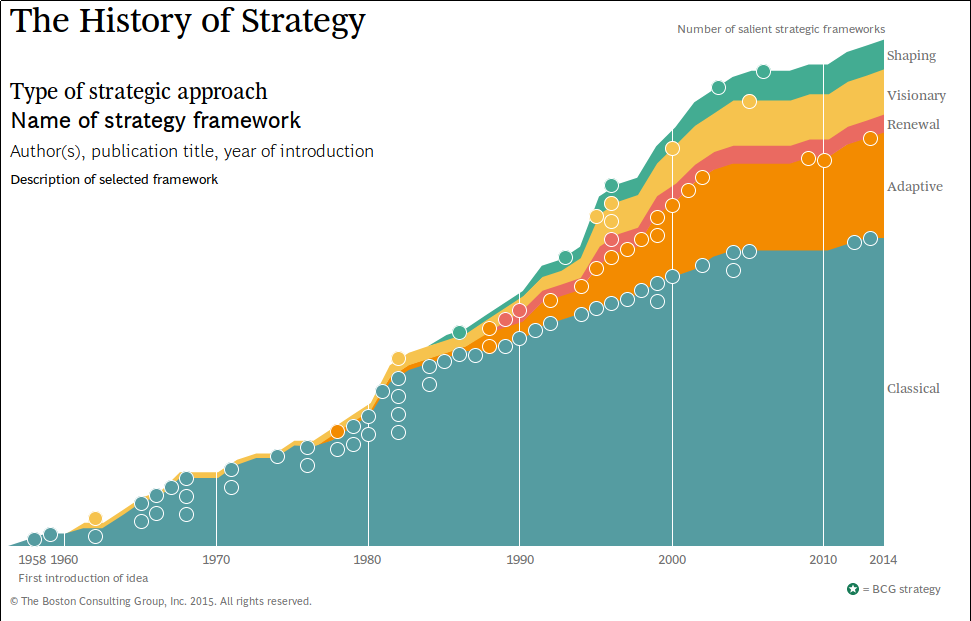
This interactive map by BCG is a useful reference for all the major strategy frameworks in the history of economics and business. The sections are BCG’s own classification of types of strategy.
Rather than cast off into this vast ocean of literature that is business strategy, we will continue where we left off - with the idea of competition.
An economist’s view of perfect competition is a state of equilibrium. As long as competition exists, customers have options and prices are affordable - reality is messier though. An economist’s view of strategy is from on high, where he can see the ebb and flow of capital through markets. The on-ground view is different though. Bruce Henderson, the founder of BCG, who we very briefly encountered in part two, writes in his 1989 essay, The Origin of Strategy,
“Classical economic theories of business competition are so simplistic and sterile that they have been less contributions to understanding than obstacles. These theories postulate rational, self-interested behavior by individuals who interact through market exchanges in a fixed and static legal system of property and contracts. Their frame of reference is “perfect competition,” a theoretical abstraction that never has existed and never could exist.”
How Business Strategy came to mean Competitive Strategy
In his essay, Henderson points out that competition is an integral facet of strategy, and uses sociobiology as a theory to prove that competition is inherent in nature, and by extension, in business. Henderson passive-aggressive quip on economists seems to me, to be directed at Porter’s five forces framework for competitive advantage. Porters framework came out about 9 years after BCG’s own portfolio planning matrix for strategic advantage and may have mucked with BCG’s matrix which we encountered in part two.
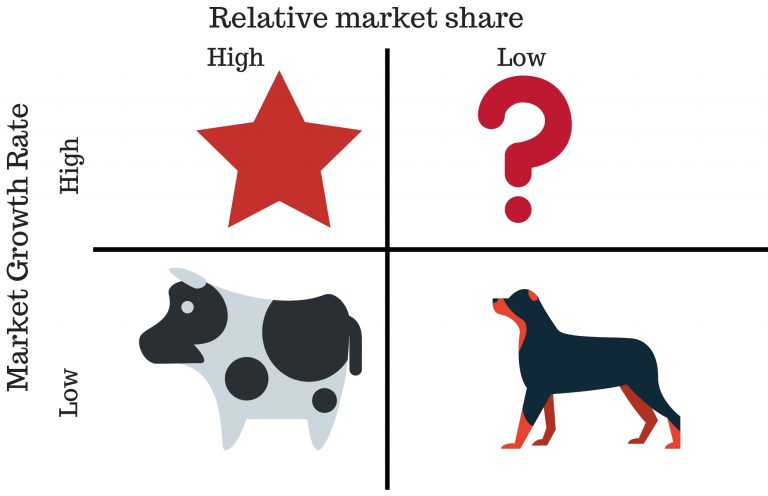
Though it had captured the imagination of executives everywhere, the BCG matrix was being attacked from some quarters for its reductionist views of organisational structure. For instance, it assumes that dogs are not as important as cash cows merely on basis of their growth potential or market share alone. The reality may be that units are sometimes chain-linked, and what may seem to be a dog could in-fact be helping the cash cow grow. Twenty years later, Henderson would write in his essay on the role of competition in strategy that “The marketing wars are forever. But market share is malarkey.”
As Walter Kiechel explains in The Lords of Strategy, Porter’s five forces were inspired by a course he took in Industrial Organisation as a part of his PhD studies. From what I understand, Industrial Organisation ( IO economics ) tries to explain how certain industries are insulated from competition and hence are more profitable. The field tries to study the forces that drive such configurations in certain types of industries.
What these economists were studying seems to have been quite abstract. They saw industries that lacked competition as anomalies, where perhaps the lack of competition suggested suspicious behavior on the part of these industries, like trying to lock out customers from the benefits of low prices.
Porter whose background was in business policy, found this subject “a surreal experience” in his own words. To him excess profitability was something to aspire towards. He describes his brainwave in his 1979 article, How competitive forces shape strategy as a way for organisations to edge out competition. The very first sentence says exactly that - “The essence of strategy formulation is coping with competition.”
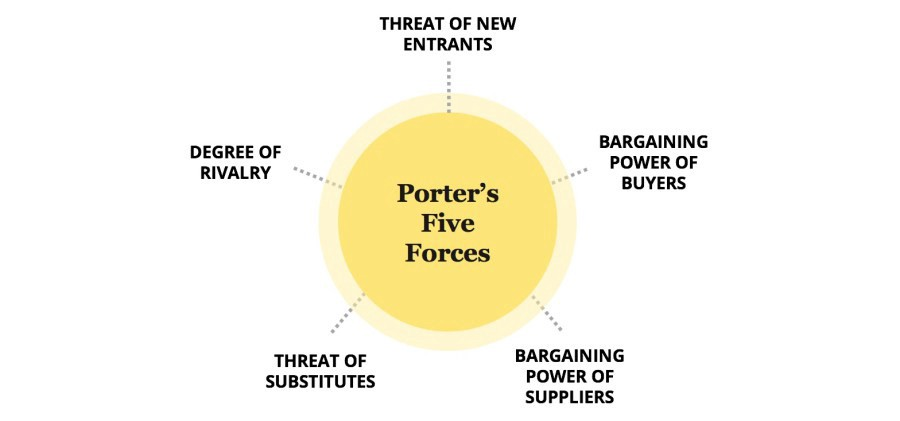
His approach was from a microeconomics POV. His framework looks at the firm’s structure and proposes that managing the five environmental forces that act on organisations can lead to competitive advantage. These were the threat of new entrants, the bargaining power of buyers and suppliers, threat of substitutes and degrees of competitive rivalry. A year later he published his book - Competitive Strategy, the one on every strategist’s bookshelf. Again, the first sentence captures what follows. He describes Competitive Strategy as… “The essence of formulating competitive strategy is relating a company to its environment.”
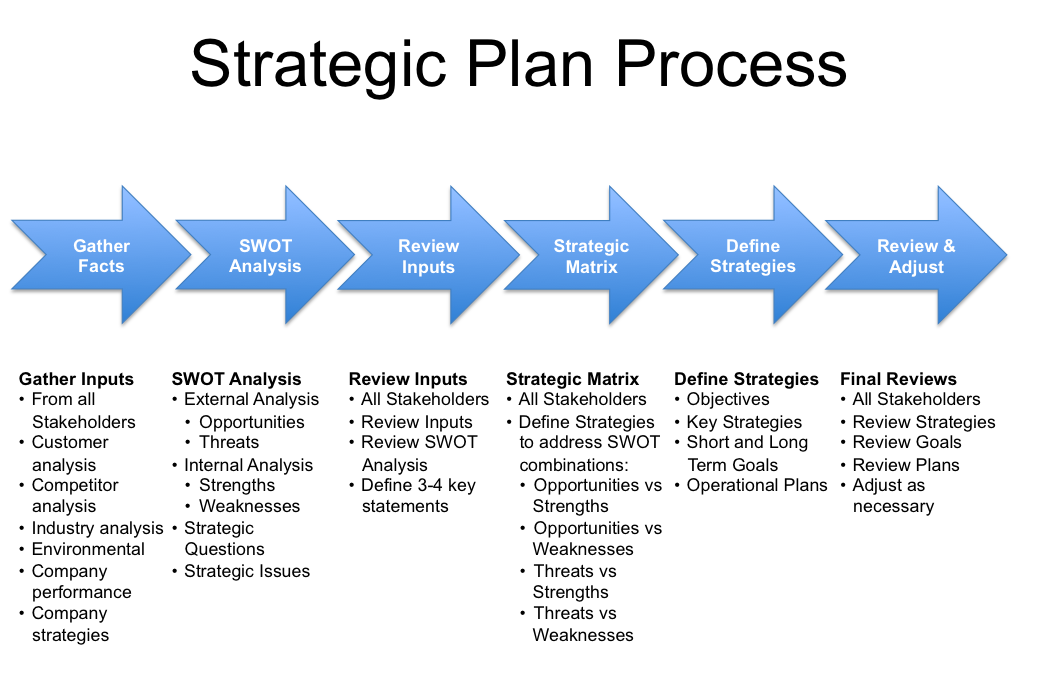
Porter’s Five forces framework replaced older, deliberate strategic thinking frameworks which used tools like SWOT. What is obvious to experienced strategists is the prescriptive nature of this exercise, the outcomes of which typically tend to be - Strategies carved in Stone.
To this day strategy carries with it a strong sense of warring with and outwitting competitors, so one can imagine the impact that Porter’s idea of strategy might have had during its launch, the height of greater Taylorism. Some of its assumptions are rarely even questioned as I discovered in my occasional consulting for startups.
The prevalence of the idea of strategy as being shaped by competitive forces are so strong, that I once made a deck and walked a startup team through why they should first focus on survival and stabilizing cash flow, before entertaining any notions of evolving competitive strategy. (How do ideas like competitive-strategy even influence startup founders anyway? Maybe these startups are started by managers from big businesses, who apply that sort of thinking to startups (startups are not yet a business) or maybe it’s that other cause of critical-thinking decay - the business press.)
Porter’s framing of competitive advantage being of just two types - low costs or differentiation, led to his prescription of there being 4 generic strategies to choose from. He warns of the dangers of being stuck in the middle, meaning, not picking one type of these 4 generic strategies and sticking with it.
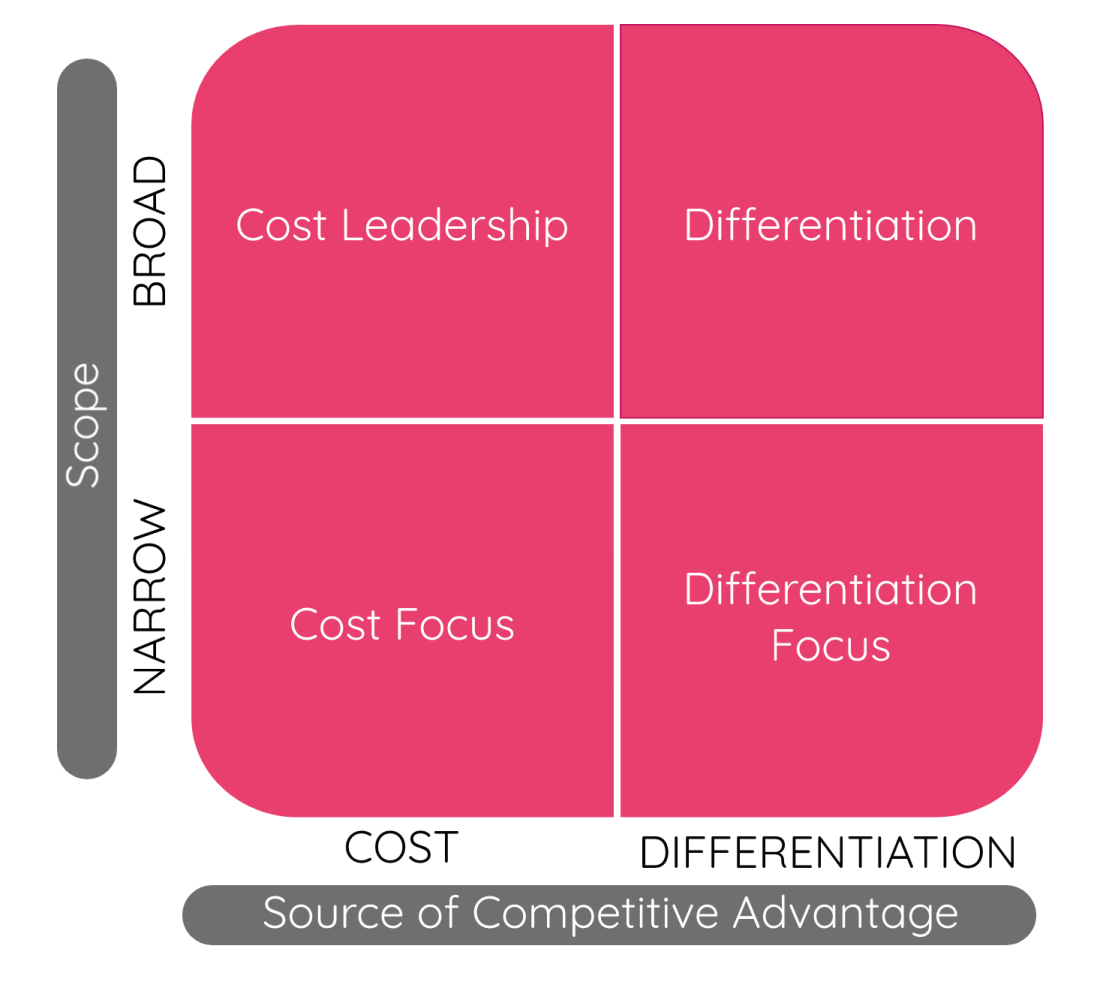
While the framework has indeed contributed much to the modern strategist’s ability to scan the environment, it took another 14 years for Armstrong and Collopy to finally put this idea to bed. In their paper - The profitability of Winning, they conclude that competitive objectives are harmful because they trigger price-wars and other types of nastiness. Firms should focus on profits, not competition. Plus his consulting firm, Monitor Group, which was applying the framework to a wide range of industries and Governments, passed away, eliciting even more questions about the validity of his framework.
Why Emergent Strategy makes more sense
Are there other ways to approach strategy without worrying about groups screwing things up? Emergent strategy is a good approach. In his HBR article from 1994, titled The Fall and Rise of Strategic Planning, Henry Mintzberg traces the origins of strategic planning from the mid-1960s as a way for executives to control strategic outcomes for their organisations. His critique of traditional strategy, that is, Deliberate strategy is worth producing here…
"… True to the scientific management pioneered by Frederick Taylor, this one best way (i.e strategic-planning) involved seperating thinking from doing and creating a new function staffed by specialists: strategic planners. Planning systems were expected to produce the best strategies as well as step-by-step instructions for carrying out those strategies so that the doers, the managers of businesses, could not get them wrong."
As Mintzberg points out, prescriptive forms of strategy may have worked in the 1950s where the average age of a listed company was about 60 years. Today their average lifespan is under 20. A team of Credit Suisse analysts spell this out. “We argue that disruption is nothing new but that the speed, complexity and global nature of it is,” … “In fact, it is clear that a number of sectors are currently impacted by multiple disruptive forces simultaneously.”
Automation, they say is the number one disruptive force.

I’ve long been fascinated by the space syntax in display by street vendors. There is no prescribed order of arrangement here, order emerges from buyer preferences and behaviour. Emergent strategy behaves like this. img source
Mintzberg’s idea of emergent strategy addresses the fallacies of strategic-planning which include among other things, how it pretends to predict the future and its idea of detachment, meaning separating planning from implementation (thinking from doing). Emergent Strategy promotes a view of strategy as one that emerges over time as practitioners intentions collide with reality, and patterns begin to emerge that were originally not intended.
Roger Martin, former dean of the Rotman School of Management on why a Plan is not a Strategy
In this sense, Emergent strategy is different from traditional, deliberate strategy practiced until then. (Actually he proposes five types. We will stick to these two for simplicity. If you’d like to learn more, there is a good discussion here.)
Business Strategy is of course a vast field, and growing everyday. We have to move on to the core of this article, so I will end Part 1 here. For those who would like to explore further, I recommend these books.
- The Lords of Strategy by Walter Kiechel for the story
- Strategy Safari by Mintzberg and others for it typology and analysis
- Strategy by Lawrence Freedman for the bigger picture on Strategy in general

Section 2 - Design Led Strategy
Can design-thinking be used for evolving Strategy?
Is design-thinking being applied for strategy work today? I could not find any serious adaptations of DT for strategy. Most are of the insipid variety that simply fit DT platitudes to old strategic planning processes, maybe dressed up with SWOT style empathy maps or the (almost mandatory) Business Model Canvas. There was that one article I came across in HBR, titled Design for Action by Tim Brown and Roger Martin though. They provide this example of applying DT to strategy making.
“In corporate strategy making, for example, a traditional approach is to have the strategist—whether in-house or a consultant—define the problem, devise the solution, and present it to the executive in charge. Often that executive has one of the following reactions:
(1) This doesn’t address the problems I think are critical.
(2) These aren’t the possibilities I would have considered.
(3) These aren’t the things I would have studied.
(4) This isn’t an answer that’s compelling to me.
As a consequence, winning commitment to the strategy tends to be the exception rather than the rule, especially when the strategy represents a meaningful deviation from the status quo.”
They go on to describe how the answer to this is iterative interaction with the decision maker. The designers go back and forth, matching the decision maker’s view to the analysis, until they settle on a strategy.
There are some things being implied here.
- That designers suit the end product to fit the decision maker’s requirement.
- That design analysis is contingent on the perceptions of the decision maker.
- That the end outcome is a single strategy.
This basically retrofits concepts like iterative design, and user-centredness (the decision-maker as the user) transplanting them from design-thinking to the traditional strategy process. It adds nothing new to strategy creation in itself. What we want to do is augment existing systems to make them better equipped to deal with the business complexities that organisations face. The sort of design-intervention being recommended by DT currently doesn’t cut it, because traditional strategy itself is becoming archaic.
Designing a new type of design-thinking
To understand why retrofitting DT over old ways of doing strategy work, won’t work, take a look at these two videos of road traffic in India.
Traditional Strategy is like this birds eye view of traffic. You trade reality for the abstractions of a model.
Design-Led Strategy is like this. You are situated within the problem you are trying to solve.
The first video, is what traditional strategy aspires to. It seeks a high level view of the environment, like the general in the battlefield we discussed earlier. However organisations don’t experience problems like this. We have to remember that an organisation is simply an abstraction. What it really is, is distributed cognition. Decisions are taken by real people, whose view from on-ground is like the trooper in the battle-trench. Reality is messy and chaotic. It needs a situated approach with ways to make sense of this chaos and navigate as adequately as possible.
Traditional Strategy is like the allegory of the Stone Soup
If you work in the corporate world, you’re bound to have heard the allegory of the Stone Soup. Corporate trainers use it all the time to explain everything from being resourceful to being entrepreneurial.

Illustration by Lydia Halverson
I think traditional strategy work (i.e Deliberate Strategy) is like the stone soup story, where just a few people really know what is going on. A couple of executives at the top are like the travellers in the story and everyone else - like the folk from the village. Everyone adds to the soup but collectively have no idea about what is going on. After the soup is made though, the executives will go “Hey Presto” on everyone, dole out the soup, and everyone rushes off to implement their bit - until the next strategy off-site.
This may have worked in the large corporations of the 60s, maybe even right up to the 90s, but this sort of deliberate planning won’t cut it any more. What is required is an emergent response, one in which strategy formation is a regular and on-going process, not unlike finance or H.R.
Strategy in this sense is a form of sense-making and its role is to create strategic-options. We are going to simply call this Design-Led Strategy. Design-led strategy has many roles to play, but its first and most important is to create Strategic-Options.

What the heck are Strategic-Options?
Strategic-Options provide the management team with alternatives. The problem with deliberate strategy is that it tends to be overly deterministic, because it seeks to predict the market anywhere from 6 months to a year in advance. With that kind of range, you cannot have options - you build just one strategy. Creating Strategic-Options takes a different approach.
One, instead of creating one, unique strategy, the team constantly scans the environment to create evidence-in-flow. This is different from traditional strategy which uses evidence-as-snapshots-in-time. One way to visualise this may be to think of live newsfeeds or dashboards of evidence. Two, Strategic-Options provides a set of actions that the organisation can choose from. This step interprets the evidence (sense-making) and provides the management team with a set of next actions.
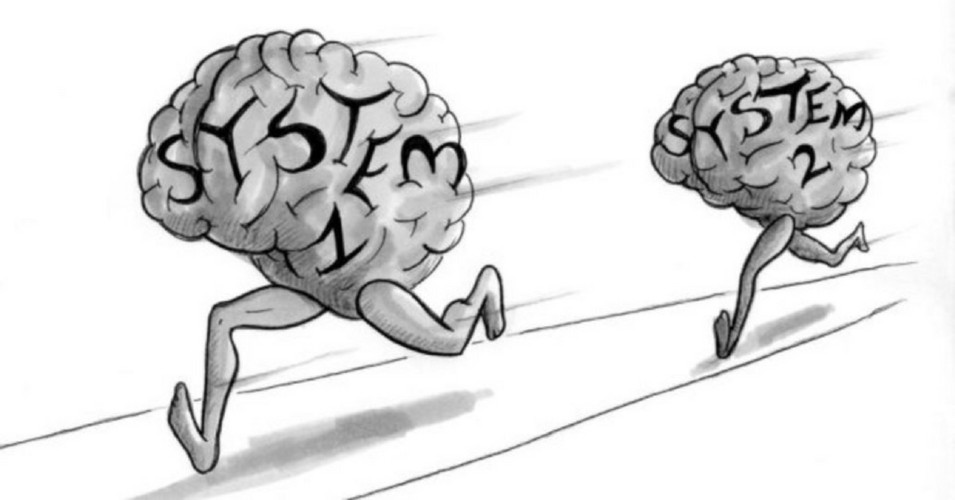
To use an analogy from Kahneman’s Thinking Fast and Thinking Slow, traditional strategy is like System 2. It is slow, reasoned and deliberate. Its way is to be analytical, because it seeks to impose order upon the world, to control it. Design-led strategy is like System 1. It is fast, automatic and adaptive. Its way is to be intuitive, because it seeks to understand the world and respond to it. Strategic-options are responses that are generated on a constant basis, across different touch-points. It might not be wrong to say that strategic-options are a kind of strategy-on-demand.
Design-Thinking has all the right ingredients, but…
We discussed in Parts two and three that there are many types of design-thinking. For the purposes of this article, the DT that I’m going to refer to, is typically organised through workshops and is aimed at mid and senior managers and executives. In this scenario, the people doing design-thinking are already steeped in the managerial process and are experienced in acquiring and making sense of data. (not insulated like the design folk) They also speak the same language as the decision-makers and understand how scenarios must be framed and presented. Most importantly, these people are, role-wise, already in a position to decide and act on the data.
So the question is, instead of using these folk for what they have been trained for and already good at, why has Design-Thinking been driving them towards innovation?
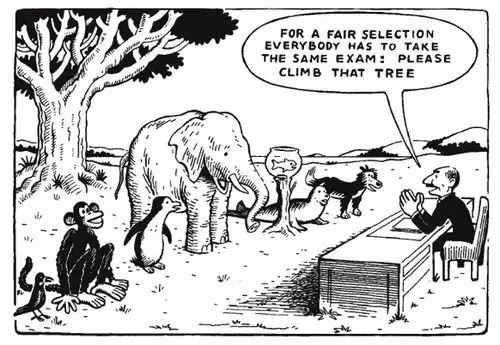
I mean, if you wish to teach them to climb the tree, go right ahead. But why though?
Think about it. Being innovation-minded is very different from working in innovation. Working with raw ideas, validating them. turning them into prototypes - all of this requires experience (or a heck of a lot of training). I think IBM recognized this early on.
In its latest iteration called Enterprise Design-Thinking, it has created types of roles, each one ostensibly aimed at different levels of DT involvement. A Practitioner for instance “participates in design thinking activities”, while a Leader “strategizes how to change the composition of teams to be more diverse and user-centered.”
(The cynical me thinks this is a tactful way of saying - “Maybe we should let the practitioner practice, hmm, now why don’t you run along and strategise?” or to paraphrase Talleyrand, a consultant who says “yes” means “maybe", a consultant who says “maybe" means “no”, and a consultant who says “no” is no consultant.)
What IBM has done here is to ensure that different types of work gets done by people who are best at it, while the torch of DT is still carried by every single person involved. This is a pragmatic approach and one that other organisations can learn from.
Sensemaking can make design-thinking mature
DT in its current form is already teaching human-centered design and many of the tools currently being used may even be retained. What is important though is that DT must go beyond being a method to also building a methodology, because design is nothing if not dead without cross-disciplinary pollination. So we are going to tweak DT to fit our needs for strategy work.
First, we will change the purpose of DT in this context from innovation to sensemaking. Sensemaking in this context means an ongoing attempt to try and untangle situations - to sense the situational complexities that surround organizations.
Gary Klein, a pioneer in the field of Naturalistic Decision Making (who we very briefly encountered in Part one) explains Sensemaking like this.
“Sensemaking is the ability or attempt to make sense of an ambiguous situation. More exactly, sensemaking is the process of creating situational awareness and understanding in situations of high complexity or uncertainty in order to make decisions. It is “a motivated, continuous effort to understand connections (which can be among people, places, and events) in order to anticipate their trajectories and act effectively.”

Is that an oasis on the horizon? Can you trust what you’re seeing? How do you make sense within the given constraints of space, time and context? img source
Remember when we spoke of the situated, practitioner-like sensibility in Miyamoto Musashi’s work earlier? You can find a similar kind of thinking in Klein’s view of sensemaking. He proposes that sensemaking is not something that leads to a certain type of knowledge, (as in deliberate strategy work), instead, it is a kind of knowing. The point of sense-making is to create situational awareness, in which data (signals of events, past or future) is framed in ways that make sense. (Frames are explanatory structures expressed through stories, maps, diagrams etc.)
This is a two-way street, so frames are also malleable, and can be filled in or re-framed by the data. This is important because both individuals and organisations are prone to biases of all kinds. This sort of plasticity is what makes sensemaking adaptive. Another approach to sensemaking that emerged in HCI uses a somewhat similar idea of representations called schema. Again, the all important malleability of such schema seems to be implied.
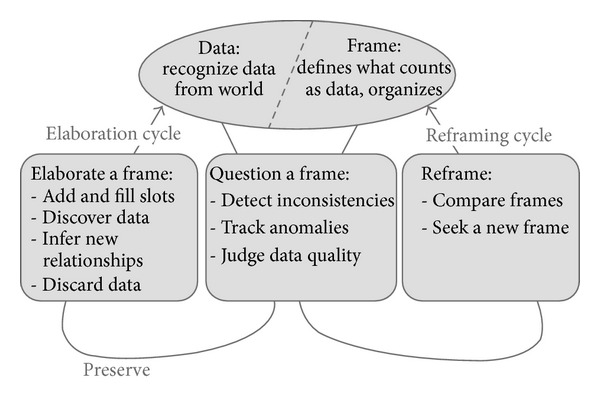
The Data-Frame model of sensemaking, Klein. Source
Making sense of crises
Another practitioner who has contributed enormously to this field is Karl Weick whose work I came across while Googling about the Bhopal Gas tragedy. Specifically his paper in which he revisits his original analysis of the Bhopal Gas Plant disaster, is a study of how people who were connected with the incident, made (or not) sense of what was happening when the the methyl isocyanate plant broke down.
He analyses many different threads to make sense of what truly happened that night, from unmaintained machinery, lax night operators, bad U.I and all sorts of procedure and technology problems. This forms the heart of sensemaking, the weaving of many different situations, perspectives and points of view, and presenting the narratives that evolve from it. He explains why sensemaking needs to be an enacted, ongoing process because these knowledge structures help organisations deal with unexpected situations. He quotes Patrick Lagadec, a consultant on crisis intelligence -
“The ability to deal with a crisis situation is largely dependent on the structures that have been developed before chaos arrives. The event can in some ways be considered as an abrupt and brutal audit: at a moment’s notice, everything that was left unprepared becomes a complex problem, and every weakness comes rushing to the forefront.”
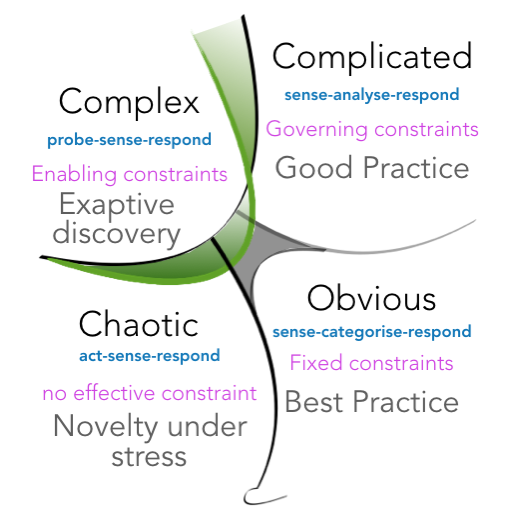
The Cynefin framework helps you make sense of your situation and evolve an appropriate response. Here too the quadrants are meant to be fluid, and not meant to suggest a categorisation framework. Source
Indeed Sensemaking is actively being used to make sense of problems in ecology, military and healthcare, and there are a number of thinkers building out ways to deal with complexity. I’m only just reading about Dr. Brenda Dervin and still trying to understand the Cynefin framework by Dave Snowden. I encourage you to seek literature from these originators rather than to start with the more simple versions found in popular management literature. One wants a practitioners perspective because situated sensemaking involves the sense-maker as an active part of the process. (Watch Snowden contrast complexity-thinking and design-thinking.)
People I learn from, here on Linkedin are: Dave Snowden (who is rumoured to turn up on your post if you say complexity thrice.) Jose Ferreira Pinto has generously sent me many resources on sensemaking. Dr. Rachel Lawes, a semiotician who does wonderful breakdowns. Theo Priestley who calls himself an anti-futurist, but don’t let that fool you. The man predicted Wework’s troubles here on Linkedin, long before the press even got wind of it.
Design-led Strategy may offer a more realistic way ahead
Don’t you think its interesting that we have come a full circle. We started with the ways in which individuals think, which has the benefit of embodied, situated response to situations. Then we went away on a positivism fuelled ride, where deterministic methods ruled and where strategic-thinking was separated from doing. With sensemaking we come back to situated practice and human sensibilities again.
In all three parts of this series I’ve been critical of design-thinking as an innovation method because of its lack of depth. If we stop framing it as an innovation method though and look at it as a way to create strategic-options, perhaps we can use all that cognitive clout that managers and executives bring to the table.
Strategy can no longer be that half-yearly exercise in spraying and praying. It needs to be supported as an ongoing discipline that tries to make sense of the organisation’s situation and provides decision-makers with strategic-options to deal with them. Design-led strategy may be just the thing that the modern business needs to help steer it safely through troubled waters.